Philipp Jent, Heimo Lagler, Christian Gatterer, Christian Althaus, Cornelia Staehelin
Impfungen zählen zu den wirksamsten präventiven Maßnahmen der modernen Medizin und haben maßgeblich zur Eindämmung oder Ausrottung zahlreicher Infektionskrankheiten mit hoher Krankheitslast beigetragen, darunter Pocken, Poliomyelitis, Masern oder Hepatitis B. Die aktive Immunisierung spielt dabei die zentrale Rolle, indem sie durch die Verabreichung von Antigenen eine langfristige Immunantwort auslöst. Die passive Immunisierung mit fertigen Antikörpern bietet hingegen nur einen kurzfristigen Schutz und wird gezielt eingesetzt, etwa bei Exposition besonders gefährdeter Personen.
In Deutschland, Österreich und der Schweiz werden Impfempfehlungen von nationalen Expert:innengremien erarbeitet und regelmäßig aktualisiert. Unterschieden werden Standardimpfungen für die gesamte Bevölkerung, Indikationsimpfungen für Risikogruppen oder besondere Expositionssituationen sowie ergänzende Impfungen, die primär dem individuellen Schutz dienen. Voraussetzung für eine Impfempfehlung sind Wirksamkeit, Sicherheit, Kosteneffizienz sowie eine praktikable Umsetzung. Die Impfwirksamkeit und mögliche Nebenwirkungen werden systematisch überwacht.
Neben Impfungen spielen weitere präventive Maßnahmen eine wichtige Rolle. Dazu gehören die Chemoprophylaxe, etwa zur Vermeidung postoperativer Infektionen, sowie Standardhygienemaßnahmen wie Händehygiene, Isolationsmaßnahmen und populationsbezogene Strategien (z. B. Quarantäne oder Social Distancing). Diese Maßnahmen ergänzen sich gegenseitig und sind entscheidend für die Kontrolle und Prävention von Infektionskrankheiten auf individueller und gesellschaftlicher Ebene.
Internationale Organisationen
- World Health Organization (WHO). Immunization, Vaccines and Biologicals.
- World Health Organization (WHO). Immunization Agenda 2030: A Global Strategy to Leave No One Behind.
- World Health Organization (WHO). WHO Vaccine Position Papers.
- World Health Organization (WHO). Strategic Advisory Group of Experts on Immunization (SAGE).
- World Health Organization (WHO). Global Vaccine Action Plan 2011-2020.
- World Health Organization (WHO). Essential Programme on Immunization.
- World Health Organization (WHO). WHO/UNICEF estimates of national immunization coverage.
- World Health Organization (WHO). Measles and rubella strategic framework: 2021-2030.
- World Health Organization (WHO). Infection prevention and control.
- Institute for Health Metrics and Evaluation. Vaccine coverage.
- The Global Polio Eradication Initiative. Eradicate Polio Now.
- Gavi. The Global Vaccine Alliance.
- Coalition for Epidemic Preparedness Innovations (CEPI). Home page.
- UNRIC – Regionales Informationszentrum der Vereinten Nationen. COVAX hat über eine Milliarde Impfdosen verteilt.
- European Centre for Disease Prevention and Control (ECDC). Vaccine-preventable diseases.
- European Centre for Disease Prevention and Control (ECDC). Vaccine Scheduler: Vaccine schedules in all countries in the EU/EEA.
- European Centre for Disease Prevention and Control (ECDC). Information systems to record information about vaccination.
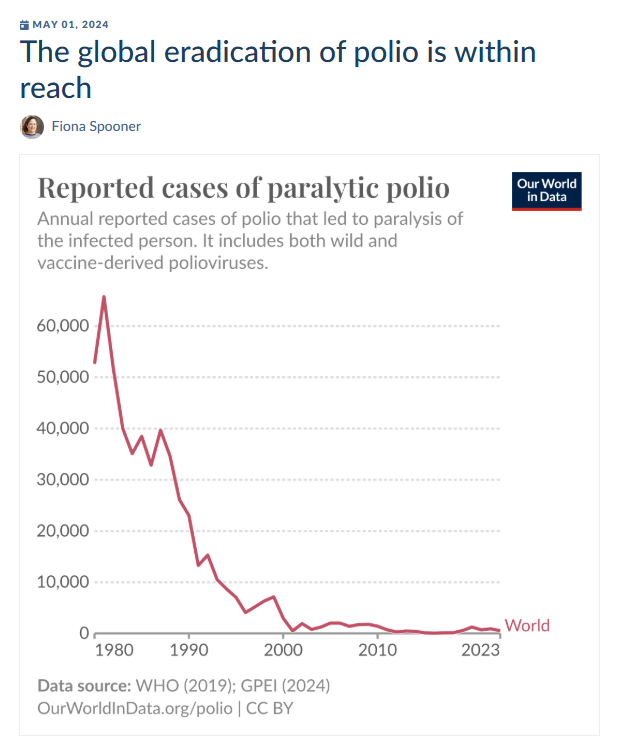
Quelle: Our World in Data.
Nationale Quellen
Schweiz
- Bundesamt für Gesundheit (BAG). Schweizerischer Impfplan.
- Bundesamt für Gesundheit (BAG). Richtlinien und Empfehlungen zu Impfungen und Prophylaxe.
- Schweizerische Eidgenossenschaft. Eidgenössische Kommission für Impffragen (EKIF).
- Infovac Die Informationsplattform für Impffragen.
Österreich
- Bundesministerium für Soziales, Gesundheit, Pflege und Konsumentenschutz. Impfplan Österreich.
- Bundesministerium für Soziales, Gesundheit, Pflege und Konsumentenschutz. Impfen.
Deutschland
- Robert Koch-Institut (RKI). Impfkalender.
- Robert Koch-Institut (RKI). Ständige Impfkommission.
- Robert Koch-Institut (RKI). Schutzimpfung gegen COVID-19.
- Deutsches Grünes Kreuz. Handbuch der Impfpraxis.
- Deutsche Gesellschaft für Tropenmedizin und Internationale Gesundheit e.V. Empfehlungen und Leitlinien.
Literatur
- Fine PEM. Herd immunity: history, theory, practice. Epidemiol Rev. 1993;15(2):265–302. Fine P, Eames K, Heymann DL. “Herd Immunity”: a rough guide. Clin Infect Dis. 2011;52(7):911–916.
- Orenstein WA, Bernier RH, Dondero TJ, et al. Field evaluation of vaccine efficacy. Bull World Health Organ. 1985;63(6):1055–1068.
- Halloran ME, Haber M, Longini IM Jr, Struchiner CJ. Direct and indirect effects in vaccine efficacy and effectiveness. Am J Epidemiol. 1991;133(4):323–331.
- Halloran ME, Struchiner CJ, Longini IM Jr. Study designs for evaluating different efficacy and effectiveness aspects of vaccines. Am J Epidemiol. 1997;146(10):789–803.
- Larson HJ, Jarrett C, Eckersberger E, Smith DMD, Paterson P. Understanding vaccine hesitancy around vaccines and vaccination. Vaccine. 2014;32(19):2150–2159.
- MacDonald NE; SAGE Working Group on Vaccine Hesitancy. Vaccine hesitancy: definition, scope and determinants. Vaccine. 2015;33(34):4161–4164.
- Brewer NT, Chapman GB, Rothman AJ, Leask J, Kempe A. Increasing vaccination: putting psychological science into action. Psychol Sci Public Interest. 2018;18(3):149–207.
- de Figueiredo A, Simas C, Karafillakis E, Paterson P, Larson HJ. Mapping global trends in vaccine confidence. Lancet. 2020;396(10255):898–908.
- Plotkin SA. Correlates of protection induced by vaccination. Clin Vaccine Immunol. 2010;17(7):1055–1065.
- Pittet D, Hugonnet S, Harbarth S, et al. Effectiveness of a hospital-wide programme to improve compliance with hand hygiene. Lancet. 2000;356(9238):1307–1312.
- Sax H, Allegranzi B, Uçkay I, Larson E, Boyce J, Pittet D. ‘My five moments for hand hygiene’: a user-centred design approach to understand, train, monitor and report hand hygiene. J Hosp Infect. 2007;67(1):9–21.
- Bratzler DW, Dellinger EP, Olsen KM, et al. Clinical practice guidelines for antimicrobial prophylaxis in surgery. Am J Health Syst Pharm. 2013;70(3):195–283.
- Righi E, Mutters NT, Guirao X, et al. ESCMID/EUCIC clinical practice guidelines on perioperative antibiotic prophylaxis in patients colonized by multidrug-resistant Gram-negative bacteria before surgery. Clin Microbiol Infect. 2023;29(4):463–479.
- Landovitz RJ, Donnell D, Clement ME, et al. Cabotegravir for HIV prevention in cisgender men and transgender women. N Engl J Med. 2021;385(7):595–608.
- Chu DK, Akl EA, Duda S, et al. Physical distancing, face masks, and eye protection to prevent person-to-person transmission of SARS-CoV-2 and COVID-19: a systematic review and meta-analysis. Lancet. 2020;395(10242):1973–1987.
- Flaxman S, Mishra S, Gandy A, et al. Estimating the effects of non-pharmaceutical interventions on COVID-19 in Europe.Nature. 2020;584(7820):257–261.
- Ferguson NM, Cummings DAT, Fraser C, et al. Strategies for mitigating an influenza pandemic. Nature. 2006;442(7101):448–452.
Lehrbücher und Berichte
- Orenstein WA, Offit PA, Edwards KM, Plotkin SA, editors. Plotkin’s vaccines. 8th edition. Philadelphia, PA: Elsevier; 2024.
- Fenner F, Henderson DA, Arita I, Ježek Z, Ladnyi ID. Smallpox and Its Eradication. Genf: WHO; 1988.
- World Health Organization, editor. WHO guidelines on hand hygiene in health care: first global patient safety challenge: clean care is safer care. Geneva, Switzerland: World Health Organization, Patient Safety; 2009.